Establishing a glider-based biogeochemical observing network for the Gulf Stream
Project Summary:
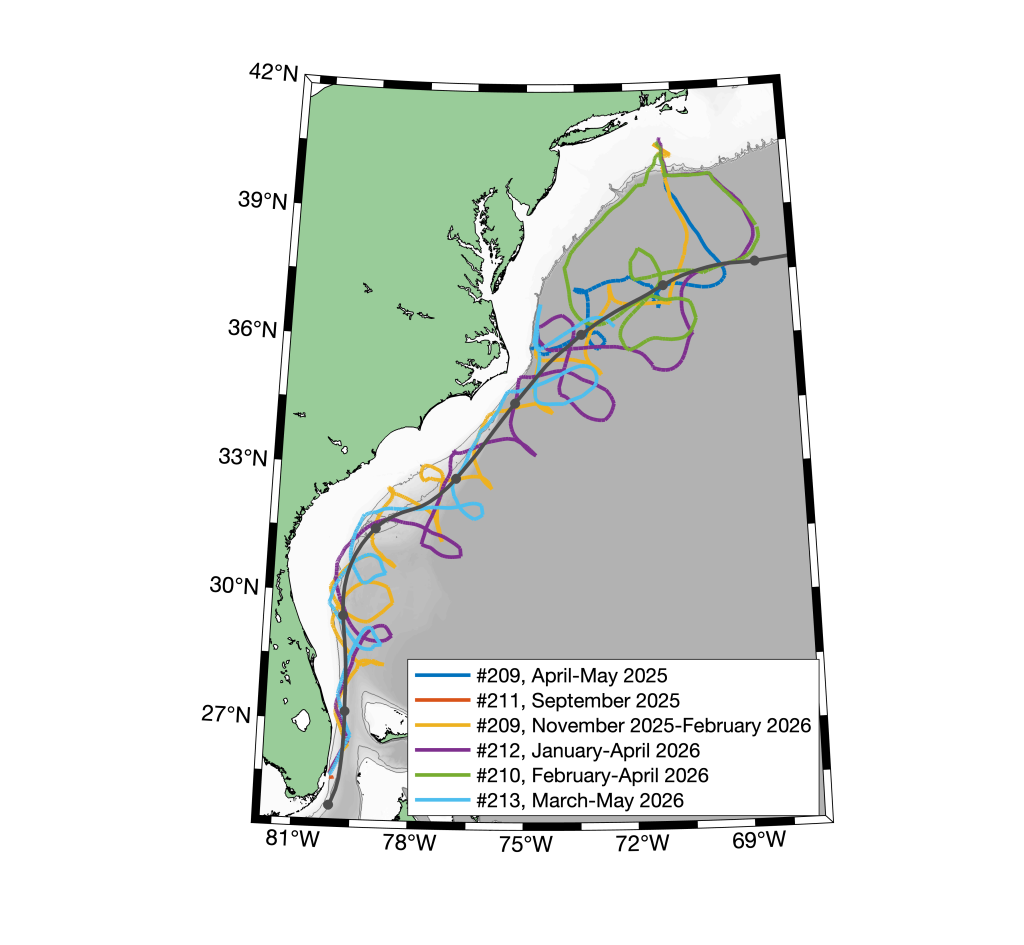
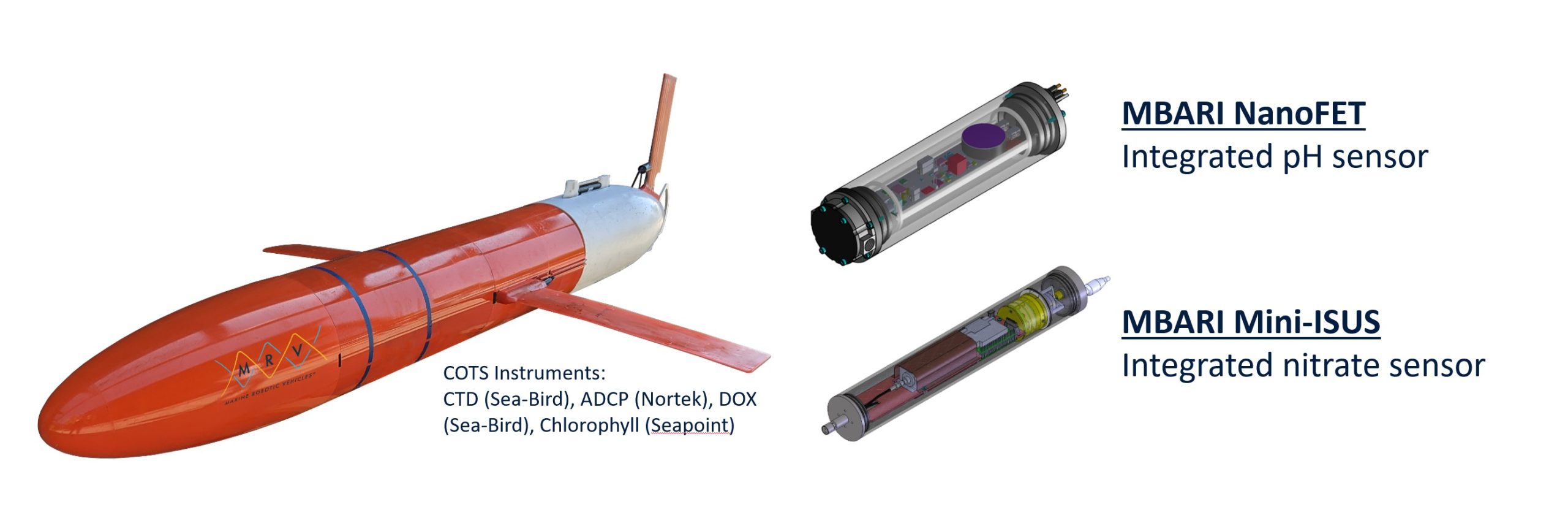
This project focuses on the Gulf Stream’s role in regulating physical and biogeochemical processes in the northwest Atlantic. The team will deploy a fleet of next-generation autonomous underwater gliders equipped with physical and biogeochemical sensors, including newly added nitrate sensors, to collect high-resolution, long-term observations between Miami, Florida, and Cape Cod. Across at least six 100-day missions spanning an annual cycle, the gliders will measure temperature, salinity, currents, pH, nitrate, and oxygen. These observations will provide baseline information on physical and biogeochemical processes in the northwest Atlantic to support future OVSN projects.
View the Real-Time Glider data here.
A second test link
Preliminary Data on the Physical and Biogeochemical Parameters across the Gulf Stream
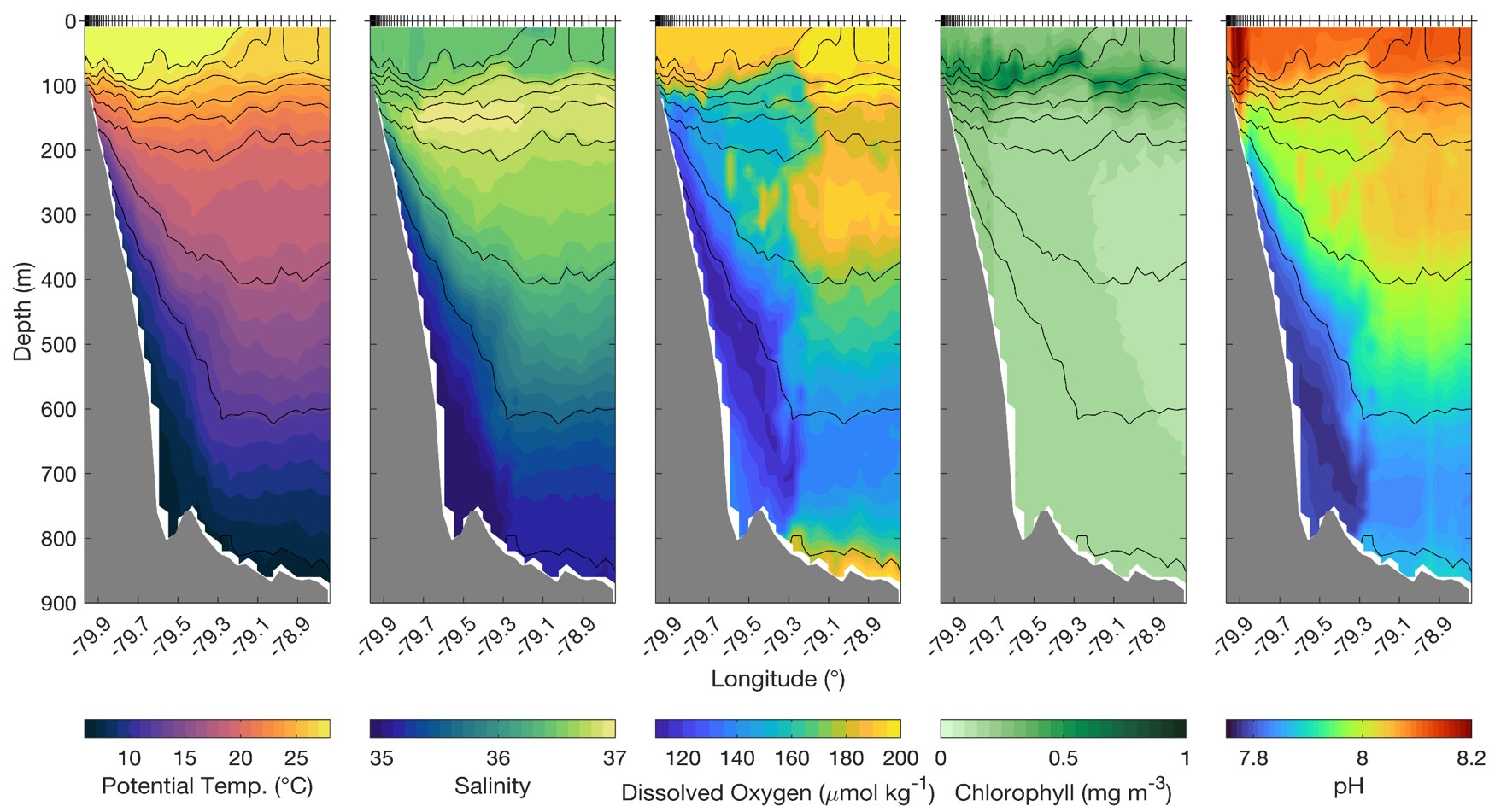
Preliminary Data on the Physical and Biogeochemical Parameters across the Gulf Stream
Other Funded Projects
A Testbed for Air-Sea CO2 Exchange at the MVCO Air-Sea Interaction Tower (ASIT)
PI:
Malcolm Scully and James Edson
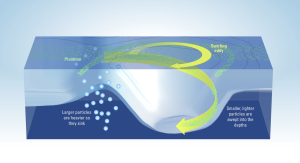
Subduction and advective pathways of particulate organic carbon
PI: Amala Mahadevan
WHOI/MIT Joint Program Students: Menno Laveaux, Kathryn Farabaugh
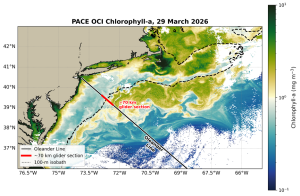
From Communities to Carbon (“C2C”): BGC glider surveys of export on the Oleander Line
PI: Hilde Oliver, Heidi Sosik, Magdalena Andres, Peter Brickley
In partnership with CMA – CGM & Bermuda Container Line